



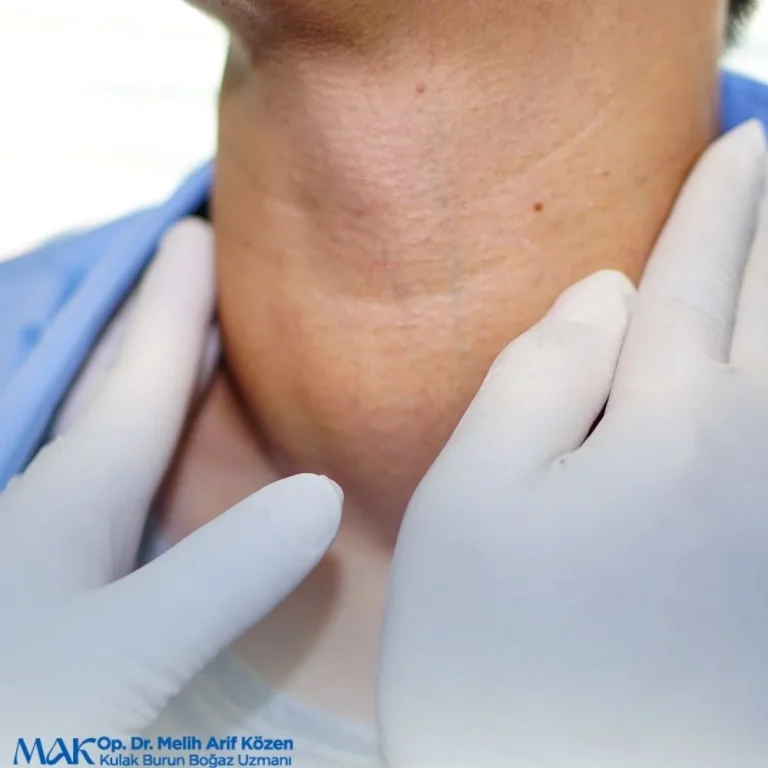
Serving in İzmir, Ear, Nose & Throat Specialist Op. Dr. Melih Arif Közen performs thyroidectomy (goiter surgery), the surgical treatment of the thyroid gland located in the front of the neck. The thyroid gland is a butterfly-shaped gland that sits in front of the windpipe; it produces the hormones that regulate the body’s metabolism. When enlargement, a nodule, or a functional disorder develops in this gland, surgical treatment may become necessary.
Thyroid enlargement, commonly known as “goiter,” occurs as the entire gland or nodules forming within it grow. While some of this growth is harmless, other cases may exert pressure that causes difficulty breathing and swallowing, or may raise suspicion of cancer. Thyroidectomy involves removing part or all of the gland, both relieving the symptoms and, when necessary, allowing a definitive diagnosis to be made.
The most critical aspect of thyroid surgery is protecting the nerves that operate the vocal cords, which run immediately adjacent to the gland, and the parathyroid glands that regulate the blood calcium balance. For this reason, the surgery must be performed by an experienced surgeon who is well versed in the anatomy of the region, using modern preservation techniques. The goal is to treat the disease safely while preserving voice and hormone balance.
Thyroid nodules are quite common, and most are benign. However, nodules that grow, exert pressure, or are found to be suspicious on examination require surgical evaluation. Any noticeable swelling in the neck or a persistent change in voice always warrants consultation with a specialist.
What Is Thyroidectomy?
Thyroidectomy is the procedure in which part or all of the thyroid gland is surgically removed. The extent of the surgery is determined by how widespread the growth in the gland is, the location of the nodules, and whether they are benign or malignant. In addition to limited surgeries in which only one lobe is removed, procedures in which the entire gland is removed may also be performed. Throughout this process, the primary priority is to protect the nerves that operate the vocal cords and the parathyroid glands.
Removal of the Gland
The enlarged gland tissue or nodules are removed within margins appropriate to the extent of the disease. This relieves pressure-related symptoms, and the removed tissue is sent for pathological examination to provide a definitive diagnosis.
Protection of the Voice Nerve
The nerves that operate the vocal cords pass immediately adjacent to the thyroid gland. The most critical stage of the surgery is carefully identifying and preserving these nerves to keep the voice healthy.
Maintaining Hormone Balance
The parathyroid glands that regulate calcium balance are preserved. When the entire gland is removed, thyroid hormone is easily and permanently replaced with medication, and balance is maintained.
In modern thyroid surgery, techniques such as nerve monitoring, which tracks the voice nerve during the operation, may be used. These methods help protect the nerve and aim to minimize the risk of hoarseness. The extent and technique of the surgery are planned individually for each patient following a detailed examination, imaging, and any necessary investigations.
In Which Cases Is Thyroidectomy Performed?
Thyroidectomy is performed to evaluate and treat enlargement, nodules, or functional disorders that develop in the thyroid gland. The type of symptoms, the characteristics of the nodule, and suspicion of cancer are decisive factors in the decision to operate. The most commonly evaluated situations are as follows.
Large Goiter Causing Pressure
Goiters that grow excessively, press on the windpipe or the esophagus, and cause shortness of breath, difficulty swallowing, or a noticeable swelling in the neck require surgery.
Suspicious or Malignant Nodules
Surgery is necessary for nodules that carry a suspicion of cancer or are found to be malignant following ultrasound and needle biopsy.
Overactive Thyroid
In cases of excessive hormone secretion (hyperthyroidism) that do not respond to medication and other treatments, surgery may be a permanent solution.
There are certain findings that suggest a nodule may be suspicious: rapid growth, firmness, hoarseness, or enlargement of the lymph nodes in the neck are among the most prominent. Such situations require a more comprehensive preoperative evaluation. Even so, a definitive diagnosis is usually confirmed through pathological examination of the removed tissue.
The vast majority of thyroid nodules are benign and require only monitoring. The decision to operate is made by evaluating the nodule’s size, growth rate, biopsy result, and the symptoms it causes together. Not every nodule requires surgery.
How Is Thyroidectomy Performed?
The method used in thyroidectomy is determined by whether the disease involves part or all of the gland, the location of the nodules, and whether they are benign or malignant. The common goal is to treat the disease within safe margins while protecting the voice nerves and the parathyroid glands. The main approaches used are as follows.
Lobectomy (Hemithyroidectomy)
If the disease is limited to a single lobe of the gland, only that lobe is removed. Because the other lobe is preserved, hormone production continues in most patients, and medication may not be required.
Total Thyroidectomy
When the disease involves both lobes or cancer is present, the entire gland is removed. Afterward, thyroid hormone is easily and permanently replaced with medication.
Extended Surgery
In malignant and spreading cases, the neck lymph nodes are also evaluated when necessary, the surgical scope is expanded, and a multifaceted treatment plan is determined.
The choice of method is made based on the preoperative examination, ultrasound, blood tests, and, when needed, needle biopsy results. The incision is usually planned in the front of the neck, following one of the natural skin creases, so that the scar becomes as inconspicuous as possible after healing. The surgeon’s experience and modern nerve-preservation techniques are decisive for both treatment success and voice health.
Preparation Before Thyroidectomy
Because thyroidectomy is a meticulous surgery performed close to the voice nerves and the hormone balance, the detailed evaluation carried out beforehand is of great importance for both accurate surgical planning and safety. At this stage, the condition of the gland and the hormone levels are determined, and the appropriate approach for the patient is planned.
Examination and Investigation
Following the neck examination, the structure of the gland and nodules is evaluated with ultrasound. Thyroid hormone levels are measured with blood tests; when necessary, preliminary information about the nodule is obtained through fine-needle biopsy. In this way, the extent of the surgery is planned in advance.
General Health Check
The necessary evaluations are performed before anesthesia, and the medications being used are reviewed. In conditions such as hyperthyroidism, bringing hormone levels into the appropriate range before surgery is important for a safe operation.
During this preparation process, the patient is informed in detail about the extent of the surgery, the precautions taken to protect the voice nerves and the parathyroid glands, and the use of hormones after surgery. A clear understanding of the process from the outset both reduces the patient’s anxiety and ensures realistic expectations.
How Is Thyroidectomy Surgery Performed?
Thyroidectomy is performed under general anesthesia, and its duration varies according to the extent of the surgery. The most important feature of the operation is identifying and preserving the voice nerves and the parathyroid glands while working. For this reason, the procedure progresses in a controlled manner through specific stages that require care and experience.
Anesthesia and Incision
The patient is put to sleep under general anesthesia. The gland is reached through a small incision in the front of the neck that follows one of the natural skin creases, so that the scar remains as inconspicuous as possible after healing.
Protection of the Nerves and Glands
The nerves that operate the vocal cords and the parathyroid glands that regulate calcium balance are carefully identified and preserved. When necessary, the integrity of the nerve is monitored throughout the operation with nerve monitoring.
Removal of the Gland and Closure
Depending on the extent of the disease, part or all of the gland is removed and sent for pathological examination. The area is checked and closed; it is sutured carefully so as not to leave a scar.
The Right Evaluation for Goiter and Thyroid Nodules
For any swelling you notice in your neck or your thyroid-related concerns, you can consult Op. Dr. Melih Arif Közen.
Recovery Process After Thyroidectomy
Recovery after thyroidectomy generally proceeds smoothly, and most patients return to their daily lives within a short time. In the first few days, there may be mild pain, tightness in the neck area, and discomfort when swallowing; these decrease over time. When the entire gland is removed, thyroid hormone is replaced with medication, and the correct dose is determined through regular follow-up.
The First Few Days
There may be mild pain and tenderness in the neck; these are easily controlled with painkillers. During this period, keeping the suture area clean and dry and following the physician’s recommendations speeds up recovery.
The Following Period
Most patients return to their normal activities within a short time. The incision scar fades over time and becomes inconspicuous because it lies within a natural crease. If hormone use is required, the dose is adjusted with blood tests and regular follow-up is carried out.
Contact your physician without delay in the following situations:
- Numbness, tingling, and cramping in the hands, around the mouth, or in the fingers
- Noticeable and persistent hoarseness
- Rapidly growing swelling in the neck, increasing bleeding, or difficulty breathing
- High fever and increasing redness or discharge at the suture site
Frequently Asked Questions
Will I need to take medication for life after thyroidectomy?
When the entire gland is removed, a single daily dose of medication is needed to replace the thyroid hormone; this medication is easy to take and, when used at the correct dose, does not affect quality of life. In surgeries where only a single lobe is removed, the other lobe continues to produce enough hormone in most patients, and medication may not be required.
Will the surgery permanently affect my voice?
One of the most important goals of the surgery is to protect the nerves that operate the vocal cords, and in experienced hands the risk of permanent hoarseness is very low. Some patients may experience temporary, self-resolving voice changes. Modern techniques such as nerve monitoring minimize this risk.
Will the surgical scar on the neck be noticeable?
The incision is usually planned to follow one of the natural skin creases of the neck. As a result, the scar becomes largely inconspicuous once healing is complete and is not noticeable under normal conditions. Scar healing may vary from person to person.
Does every goiter or nodule require surgery?
No. The vast majority of thyroid nodules are benign and require only regular monitoring. The decision to operate is made by evaluating the nodule’s size, growth rate, biopsy result, hormone status, and the symptoms it causes together.