



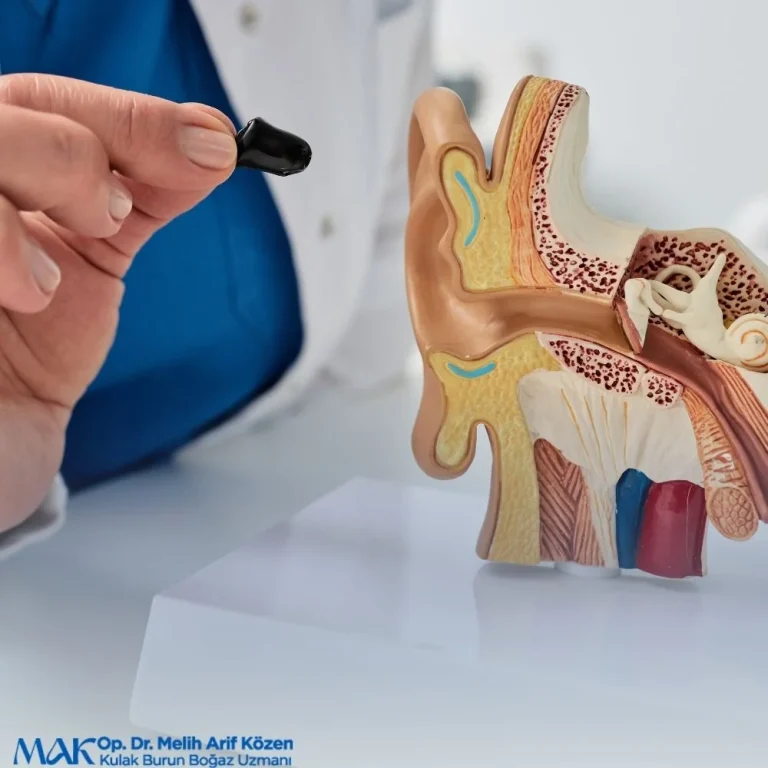
Ear, Nose & Throat Specialist Op. Dr. Melih Arif Közen, who practices in İzmir, performs ventilation tube (ear tube) insertion, particularly for fluid build-up in the middle ear and recurrent ear infections that are common in children. An ear tube is a very small tube placed in the eardrum that ventilates the middle ear and helps drain the accumulated fluid.
Because the Eustachian tube, which connects the middle ear to the back of the nose, is narrow and horizontal in children, it can easily become blocked. When this happens, fluid accumulates in the middle ear, and reduced hearing, balance problems, speech delay and recurrent infections may occur. When medication is insufficient and the fluid persists for a long time, an ear tube is an effective solution that both rapidly improves hearing and reduces infections.
Fluid build-up in the middle ear is frequently seen together with enlarged adenoids. In such cases, the ear tube can, when necessary, be inserted during the same session as adenoid surgery.
What Is an Ear Tube (Ventilation Tube)?
A ventilation tube is a millimetre-sized tube placed into a small opening made in the eardrum. By continuously ventilating the middle ear, this tube helps drain the accumulated fluid and prevents new fluid from building up. As a result, hearing improves quickly and recurrent infections decrease. Once the tube has completed its task, it most often falls out on its own.
Ventilation of the Middle Ear
By allowing air to pass between the middle ear and the outside environment, the tube balances the pressure and prevents fluid build-up.
Improved Hearing
When the accumulated fluid drains, sound transmission returns to normal; hearing usually improves shortly after the procedure.
Fewer Infections
Because the middle ear is properly ventilated, recurrent ear infections and the related complaints decrease markedly.
When Is an Ear Tube Used?
An ear tube is considered when fluid persists in the middle ear for a long time, affects hearing and the child’s development, and does not respond adequately to medication. The most commonly assessed reasons are as follows.
Persistent Middle Ear Fluid
Fluid build-up that remains in the middle ear despite medication, usually for more than three months, and affects hearing.
Recurrent Ear Infections
Middle ear infections that recur frequently at short intervals and increase the need for antibiotics.
Impact on Hearing and Speech
Fluid-related hearing loss that affects the child’s speech development, school performance and daily life.
Middle ear fluid often has enlarged adenoids at its root. For this reason, tube insertion is planned, when necessary, together with adenoid surgery to achieve a lasting solution.
How Is an Ear Tube Inserted?
Ear tube insertion is a short and very safe procedure. The type of tube and the method of insertion are determined according to the child’s age, the condition of the fluid and any accompanying problems.
Accessing the Eardrum
The ear canal is entered under microscopic guidance and a very small opening is created in the eardrum. No external incision is made.
Draining the Fluid
The fluid that has accumulated in the middle ear is carefully drained through this opening, and the ear is prepared for ventilation.
Placing the Tube
The millimetre-sized tube is placed into the opening created. The tube ventilates the middle ear and, once it has completed its task, most often falls out on its own.
Preparation Before Ear Tube Insertion
Although ear tube insertion is a short and safe procedure, the assessment carried out beforehand is important for an accurate diagnosis and for the child’s comfort. At this stage, the condition of the fluid and the degree to which hearing is affected are determined.
Examination and Hearing Test
Fluid in the middle ear is confirmed through ear examination and, if necessary, tympanometry. The effect of the fluid on hearing is measured with a hearing test.
General Assessment
Accompanying problems such as enlarged adenoids are evaluated. Before anaesthesia, the child’s general health is checked and appropriate planning is made.
How Is the Ear Tube Procedure Performed?
In children, ear tube insertion is performed under brief general anaesthesia and is usually completed in a very short time, around 10–15 minutes. Because there is no external incision, no scar remains. The procedure progresses through specific stages, and most patients are discharged the same day.
Anaesthesia and Preparation
The child is put to sleep with brief general anaesthesia. The ear canal is assessed under microscopic guidance and prepared for the procedure.
Draining the Fluid
A very small opening is created in the eardrum and the fluid accumulated in the middle ear is carefully drained.
Placing the Tube and Waking Up
The millimetre-sized tube is placed into the opening. The procedure is completed and the child wakes from anaesthesia shortly afterwards, usually being discharged the same day.
Let’s Talk About Your Child’s Hearing Health
For complaints of middle ear fluid and recurrent ear infections, you can consult Op. Dr. Melih Arif Közen.
Recovery After Ear Tube Insertion
Recovery after ear tube insertion is usually quick and comfortable. In many children, hearing improves noticeably right after the procedure once the fluid has drained. Protecting the ear after the procedure and attending regular check-ups are important for the process to proceed smoothly.
The First Few Days
The child usually returns to daily life the same day. Mild ear discharge may occur in the first few days; this is usually normal and is kept under control with the drops recommended by the doctor.
The Following Period
The tube continues to ventilate the middle ear and, once it has completed its task, most often falls out on its own within months. Regular ear check-ups are carried out during this period.
Consult your doctor without delay in the following situations:
- Prolonged or foul-smelling ear discharge
- High fever and increasing ear pain
- Marked, persistent hearing loss
- Severe restlessness in the child and complaints of imbalance
Frequently Asked Questions
How long does an ear tube stay in?
Once the tube has completed its job of ventilating the middle ear, it most often falls out on its own; this period usually ranges from a few months to a year. After the tube falls out, the small opening in the eardrum usually closes on its own. This process is monitored with regular check-ups.
Can my child go in water with a tube in place?
Normal bathing and swimming usually cause no problems for most children; however, care should be taken with diving deep and swimming in dirty water. Your doctor will advise whether ear plugs are needed based on your child’s condition.
Is the procedure painful?
Because the procedure is performed under brief general anaesthesia, the child feels nothing. No significant pain is expected afterwards; most children return to their normal activities within a short time.
Can the problem recur after the tube falls out?
In most children, the problem resolves after the tube falls out. However, if Eustachian tube function has not recovered sufficiently or enlarged adenoids persist, fluid build-up may recur. In that case, a re-evaluation is carried out.